
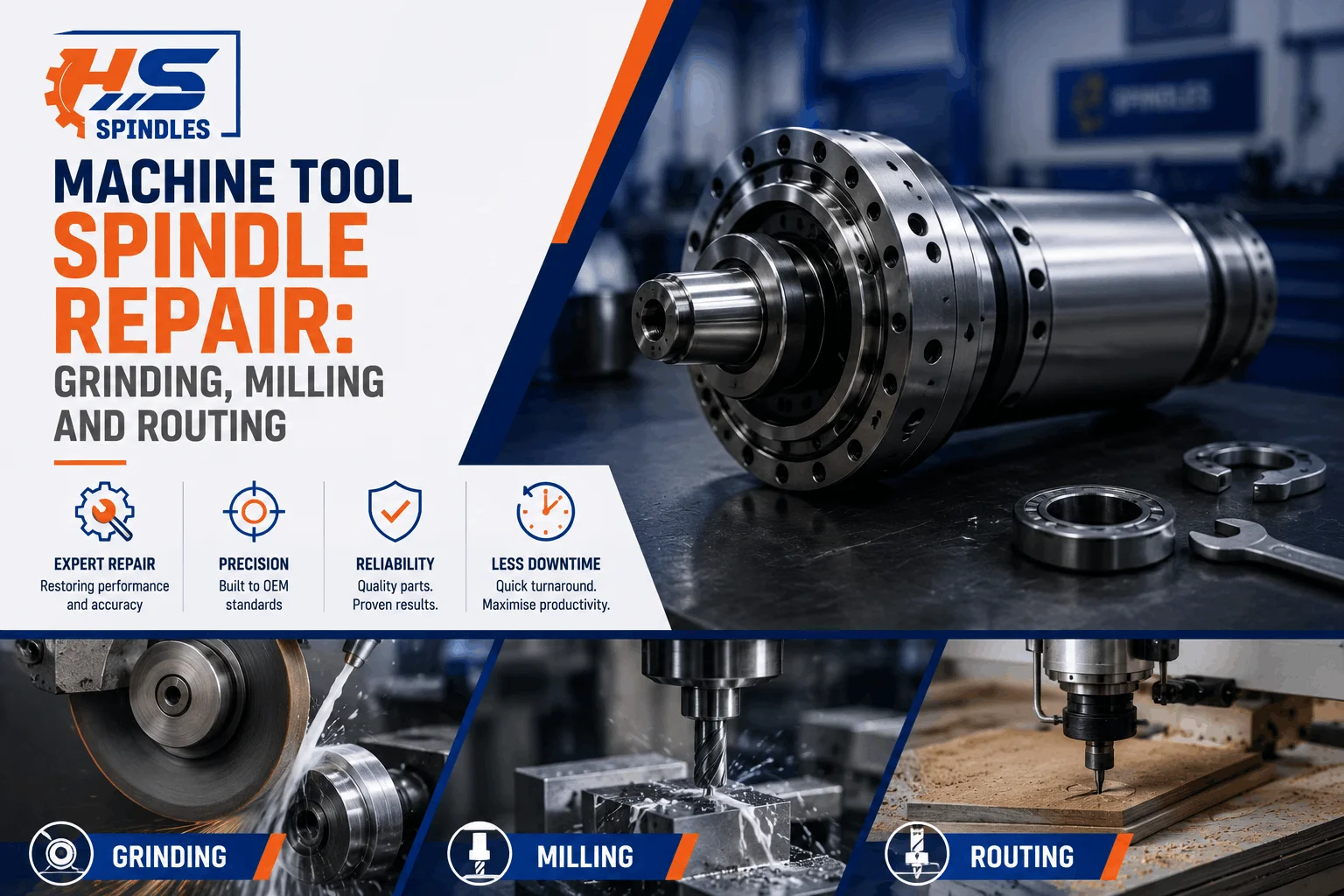
A spindle is the heart of any machine tool. Whether you are grinding precision components, milling complex parts, or routing wood and composite materials, spindle performance directly affects accuracy, surface finish, productivity, and tool life. When a spindle begins to show signs of wear, performance can decline rapidly, leading to costly downtime and reduced production quality.
This is where machine tool spindle repair becomes essential. A professionally repaired spindle can restore original performance, extend equipment life, and save thousands compared to complete replacement.
In this guide, we will explore the importance of spindle repair across grinding, milling, and routing applications, common spindle failures, warning signs to watch for, and how professional repair services help manufacturers maintain peak productivity.
Why Machine Tool Spindles Matter
Machine tool spindles are designed to rotate cutting tools or workpieces at precise speeds while maintaining exceptional accuracy. They operate under demanding conditions, often running for extended periods at high RPMs and under heavy loads.
A properly functioning spindle provides:
- Consistent machining accuracy
- Improved surface finish
- Reduced tool wear
- Better production efficiency
- Reliable machine performance
Even minor spindle issues can create significant problems throughout the manufacturing process. That is why machine tool spindle repair is a critical part of preventive maintenance strategies for modern workshops.
Common Causes of Spindle Failure
Machine tool spindles endure constant stress. Over time, various factors can lead to component wear and eventual failure.
Bearing Wear
Bearing failure is one of the most common reasons for spindle breakdown. Bearings support the spindle shaft and maintain rotational accuracy.
Common causes include:
- Contamination
- Improper lubrication
- Excessive heat
- High operating loads
- Long service intervals
Worn bearings often result in vibration, noise, and reduced machining accuracy.
Tool Crashes
Unexpected collisions between tooling and workpieces can damage spindle components instantly.
A crash may lead to:
- Bent shafts
- Damaged tapers
- Bearing damage
- Misalignment
Even a minor impact can affect spindle precision and require immediate inspection.
Contamination
Dust, coolant, chips, and debris can enter spindle assemblies when seals become compromised.
Contamination frequently causes:
- Bearing failure
- Corrosion
- Excessive wear
- Reduced cooling efficiency
Regular maintenance and inspection help minimise contamination-related issues.
Overheating
High temperatures accelerate component wear and reduce bearing life.
Common causes of overheating include:
- Insufficient lubrication
- Cooling system failure
- Excessive spindle loads
- High-speed operation beyond specifications
Persistent overheating often indicates the need for professional spindle evaluation.
Machine Tool Spindle Repair for Grinding Applications
Grinding operations demand some of the tightest tolerances in manufacturing.
Grinding spindles typically operate at extremely high speeds while maintaining exceptional rigidity and precision.
When a grinding spindle begins to fail, operators may notice:
- Poor surface finishes
- Burn marks on workpieces
- Increased vibration
- Dimensional inaccuracies
- Excessive spindle noise
Professional machine tool spindle repair for grinding applications often includes:
Bearing Replacement
High-precision bearings are replaced with OEM-quality components to restore performance.
Shaft Inspection
Technicians inspect spindle shafts for wear, damage, and runout issues.
Dynamic Balancing
Balancing ensures smooth operation at high RPMs and reduces vibration.
Runout Testing
Precision testing verifies spindle accuracy before returning the unit to service.
Proper repair helps grinding spindles maintain the precision required for demanding applications.
Machine Tool Spindle Repair for Milling Machines
Milling machines rely on spindle accuracy to produce precise cuts, maintain tool life, and achieve consistent production quality.
Because milling spindles encounter varying cutting forces, they are particularly vulnerable to wear over time.
Common symptoms of milling spindle problems include:
- Excessive vibration
- Poor dimensional accuracy
- Tool chatter
- Reduced surface quality
- Unusual operating noise
A comprehensive machine tool spindle repair process for milling equipment typically includes:
Complete Disassembly
Technicians carefully inspect all internal components for wear and damage.
Taper Restoration
Damaged tapers can negatively impact tool retention and machining accuracy.
Precision grinding restores taper geometry to OEM specifications.
Bearing Replacement
New bearings restore spindle stability and improve machining performance.
Dynamic Balancing
Balancing minimises vibration and improves spindle reliability.
Once repaired, milling spindles can often perform like new while avoiding the expense of full replacement.
Machine Tool Spindle Repair for Routing Applications
Routing spindles are widely used in woodworking, plastics, composites, and sign manufacturing.
These spindles frequently operate at very high speeds and are exposed to dust and airborne contaminants.
Common routing spindle issues include:
- Excessive noise
- Bearing wear
- Loss of cutting precision
- Overheating
- Reduced spindle speed
Professional repair services focus on:
Bearing Upgrades
Quality bearings improve reliability and performance under demanding conditions.
Seal Replacement
New seals help prevent contamination and extend spindle life.
Motor Inspection
Electrical components are tested to ensure efficient operation.
Performance Testing
Final testing verifies speed, vibration levels, and operational accuracy.
Timely machine tool spindle repair helps routing operations avoid costly downtime and maintain production schedules.
Signs Your Spindle Needs Repair
Early detection can prevent catastrophic failures and reduce repair costs.
Watch for the following warning signs:
Increased Vibration
Excessive vibration often indicates bearing wear or imbalance.
Unusual Noise
Grinding, humming, or rattling sounds should never be ignored.
Poor Surface Finish
A sudden decline in part quality often points to spindle issues.
Elevated Temperature
Spindles running hotter than normal may require immediate attention.
Tool Chatter
Chatter can indicate spindle wear, bearing damage, or alignment problems.
If any of these symptoms appear, scheduling an inspection can prevent more extensive damage.
Benefits of Professional Machine Tool Spindle Repair
Many manufacturers automatically assume replacement is the only solution when a spindle fails.
In reality, repair often provides significant advantages.
Lower Costs
Repair is typically much more affordable than purchasing a new spindle.
Reduced Downtime
Many repairs can be completed faster than sourcing replacement equipment.
Extended Equipment Life
Quality repairs restore spindle performance and maximise asset value.
Improved Reliability
Rebuilt spindles often include upgraded components and modern repair techniques.
Restored Precision
Professional repair returns the spindle to factory-level performance standards.
Choosing the Right Spindle Repair Partner
Not all repair providers offer the same level of expertise.
When evaluating a spindle repair company, consider:
- Experience with your spindle brand
- Precision balancing capabilities
- Advanced testing equipment
- OEM-quality replacement parts
- Detailed inspection reports
- Comprehensive warranty coverage
A reputable repair partner will provide clear communication throughout the repair process and deliver measurable results.
Final Thoughts
Machine tool spindles play a critical role in grinding, milling, and routing operations. When performance begins to decline, timely machine tool spindle repair can restore accuracy, reduce downtime, and significantly extend equipment life.
From bearing replacement and taper restoration to dynamic balancing and final testing, professional repair services help manufacturers maintain productivity while avoiding the cost of complete spindle replacement.
By recognising early warning signs and partnering with experienced spindle repair specialists, businesses can protect their equipment investment and keep production running efficiently for years to come.

